
Zuplo Changelog
We release improvements, new features, and fixes daily. Follow along here to see the most important updates.
Proxy data or services from Firestore through Zuplo using two new policies.
- Upstream Firebase Admin Auth - authorizes requests using a Firebase Admin Token that can be used to call any Firebase API.
- Upstream Firebase User Auth - authorizes requests as a specific user which allows securing Firebase resources using security rules
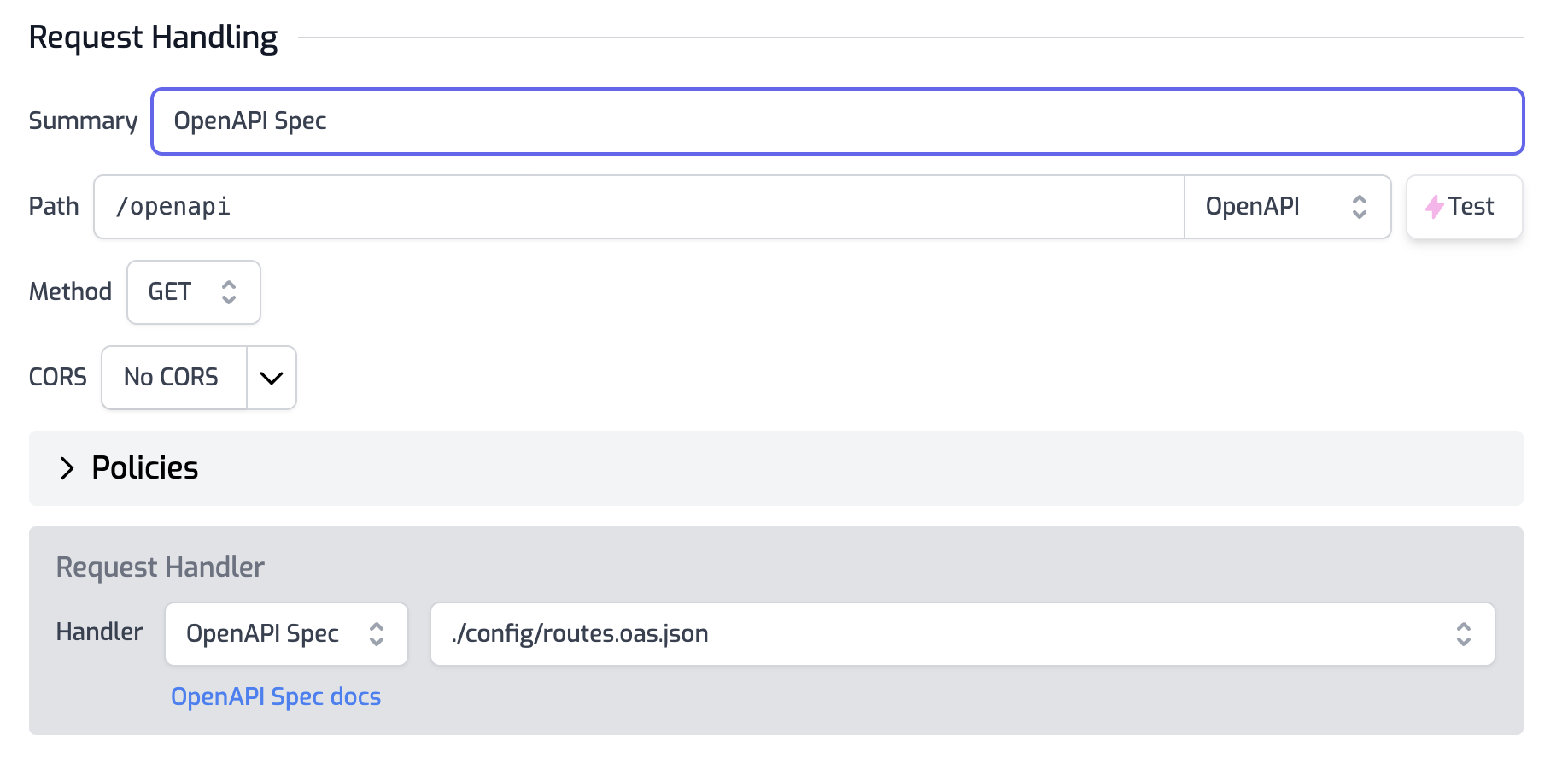
The new Open API handler allows serving the public version of your OpenAPI file through a route of your choice.

The context.route property on the
ZuploContext object now exposes the raw Open
API operation JSON for use in handlers or policies.
export async function myHandler(request: ZuploRequest, context: ZuploContext) {
const raw = context.route.raw();
return raw;
}The incomingRequestProperties property on the
ZuploContext route now exposes several
additional values:
postalCode- Postal code of the incoming request, for example, "78701".metroCode- Metro code (DMA) of the incoming request, for example, "635".region- If known, the ISO 3166-2 name for the first level region associated with the IP address of the incoming request, for example, "Texas".regionCode- If known, the ISO 3166-2 code for the first-level region associated with the IP address of the incoming request, for example, "TX".timezone- Timezone of the incoming request, for example, "America/Chicago".
When using environment variables in with string interpolation in routes.json
or your OpenAPI file, i.e. "option": "my-$env(ENV_VAR)-value" undefined
environment variables would result in the string "undefined" (Javascript's
result of ${undefined}). Instead undefined variables will now result in an
empty string.
Secure Tunnels can now be managed using the Zuplo CLI or using the Developer API